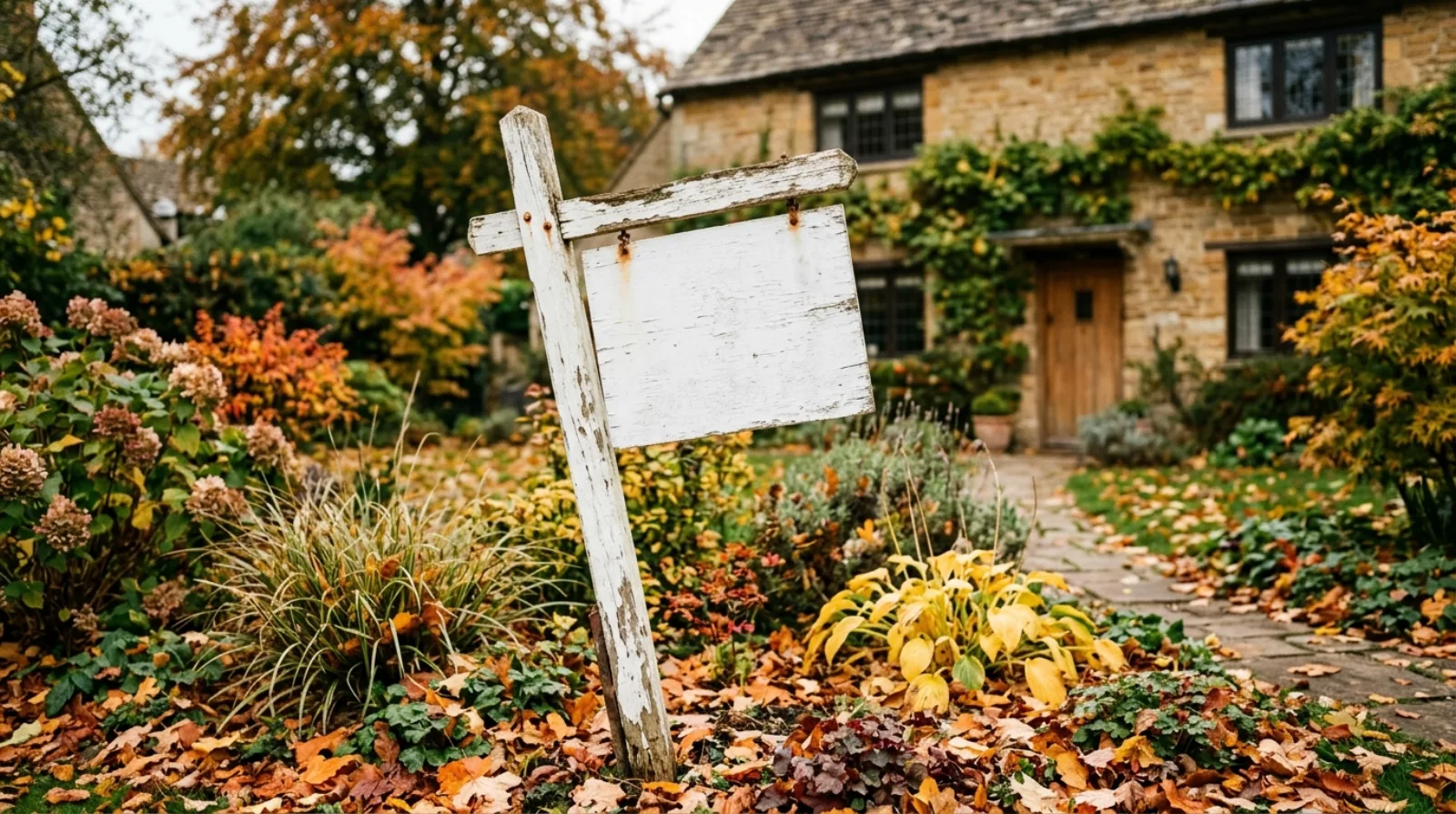
For-sale-by-owner sales fell to an all-time low of 5 percent in NAR's 2025 Profile of Home Buyers and Sellers, down from 7 percent the year before, while a record 91 percent of sellers used an agent. Most owners who try selling alone end up hiring someone. The only open question is which agent they call.
Who actually tries selling on their own
The stereotype is a stubborn owner who thinks agents are overpaid. Some are. Most are running a reasonable experiment.
Three motives cover nearly all of them. The first is the commission, which is the obvious one and the one every agent prepares for. The second is confidence born of a specific circumstance: a hot street, a buyer already sniffing around, a neighbour who sold in a weekend. The third is control, usually from someone who had a poor experience with an agent before and would rather do it badly themselves than hand it over again.
There is a fourth group worth separating out, because the approach differs. A meaningful share of owner sales are not marketed at all. NAR reports that 40 percent of FSBO sellers did not actively market the property, which usually means the buyer was already known: a relative, a neighbour, a tenant. Those transactions were never available to any agent, so treating them as lost listings distorts your sense of the opportunity.
The people worth your attention are the ones who put up a sign, took their own photos, and are genuinely trying to reach the market. They are running the experiment, and experiments produce results.
The honest reason most of them convert
They do not give up because an agent finally used the right script. They give up because the work turns out to be specific, and the parts they did not anticipate are the parts that stall.
NAR's data names the difficulties directly: FSBO sellers most often struggled with pricing the home, preparing it for sale, and selling within the timeframe they wanted.
Every one of those is a moment of doubt with a question attached. Is my price wrong, or is it the photos? How long is too long? What am I supposed to do with this offer that has three conditions in it? Those questions get typed into a search box late at night by someone who will not pick up an unknown number at six in the evening.
The other pressure point is the buyer's agent. Most buyers arrive represented, and that agent expects compensation. Owners often discover this after the first serious enquiry, which means the savings they were counting on shrink at exactly the moment their confidence does.
There is also a price signal in the NAR figures, and it needs a caveat. The median FSBO sale price was $360,000 against $425,000 for agent-assisted sales. Those are not the same homes in the same places, so the gap is not a measure of what an agent adds. It is still a number most owners have never seen, and it belongs in a calm sentence rather than a warning.
Why the cold-call approach is crowded and disliked
FSBO lists are easy to assemble. That is the whole problem.
The listings are public by design, because the owner is advertising. Several services scrape and sell them, so every agent in the area receives the same names on the same morning. An owner who puts up a sign on Saturday has fielded a dozen calls by Tuesday, all opening the same way, several implying they have made a mistake.
By the ninth call the owner has stopped hearing sentences. They have learned a pattern and they hang up on it. This is what makes the channel expensive. One listing costs you hundreds of calls, plus the reputation cost of being remembered as one of those callers.
The scripts also fight the owner's position. A person who has just publicly committed to selling on their own has a reason to defend that choice when challenged. Calling on day two, before any evidence has arrived, asks them to abandon the experiment before it has told them anything.
None of this means outreach never works. Agents do win listings this way, particularly with persistence past the point where others quit. It means the channel is saturated, the conversion rate is low, and the method is unpleasant enough that most agents stop within a month. Our post on expired listings covers a related audience where the same saturation problem shows up, and the same fix applies.
The content approach: be useful before you are needed
There is a version of this that runs in the opposite direction. Instead of contacting owners the week they start, publish the thing they will search for the week it starts going wrong.
That means a page that genuinely helps someone sell without an agent. Not a page pretending to help while arguing against the idea, which readers detect in about one paragraph. A real one.
The mechanism is straightforward. The owner searches a practical question. Your page answers it properly. They read it, use it, and save it. Some weeks later the attempt stalls on pricing or paperwork, and they need someone. They do not open a directory or answer a cold call. They go back to the page that was useful and look for the name on it.
This requires accepting a real cost. The page will occasionally help somebody sell their house on their own, and you will have contributed to losing a listing. That is not a flaw in the approach. It is the thing that makes the approach credible, and there is no version that keeps the trust while withholding the useful part.
In practice the arithmetic favours you anyway. Owners who read an honest, detailed guide to selling alone usually come away with a clearer picture of the work involved. The guide makes your case by being accurate, which is more convincing than any paragraph warning them off.
What to put on the page
Generic advice is the failure mode. An owner can find twenty national articles about pricing a home, and none of them know what documents your province or state requires. Local detail is the only thing you have that a content farm does not.
Include a pricing method they can actually follow, using public sale data, with the adjustments that matter in your area. Cover the paperwork by name: the disclosure forms your jurisdiction requires, who prepares the contract locally, and what the lawyer or notary handles. Explain how a buyer's agent gets paid in your market and what the owner needs to decide about that up front, because this is the detail that most often surprises them.
Add the practical logistics. What photography costs locally and who does it. How measurement standards work in your market. What a showing schedule looks like when you have a job. How to handle a stranger who wants to see the house on a Tuesday night, which is a safety question owners rarely think about until the first request arrives.
Then a plain section on when hiring someone makes sense. Not a pitch. A short, honest list: if the property has a complication, if the timeline is tight, if the first four weeks have produced nothing. Name the signals, and say what you would do at that point. Our post on website photos is worth linking from it, since presentation is one of the two things NAR found these sellers struggle with most.
The long-game economics
Cold calling produces contacts this week. A page produces contacts for years, and the two have different cost shapes.
The call costs your time every single time, and the cost repeats for every owner. The page costs a solid week to research and write properly, then keeps qualifying people while you are showing houses. An owner who arrives from a search has already read your reasoning, which makes the first conversation shorter and more serious than any cold call ever is.
The timing is also better suited to this audience. An owner is not ready on day two and often is ready in week seven, and no outreach schedule can be present at week seven for everyone without becoming the thing they avoid. A page is present continuously at no extra cost, and they arrive at their own moment.
Be realistic about the ramp. Search visibility for local phrases takes months to build, and the first enquiry may be a season away. Our post on follow-up that works covers what to do with the contacts in between, because a FSBO owner who reaches out early still needs months of light, useful contact rather than pressure.
Ethics and tone
Two lines are worth holding, and they mostly overlap with your board's conduct rules.
The first is respecting a stop request, completely. Do-not-call regulations in Canada and the US carry real penalties, and an owner who has said no is a person you will meet again in a small market. Publishing a resource someone chooses to find is a different act from contacting someone who declined.
The second is tone. Never write as though the owner is making a foolish decision. Plenty of FSBO sales work out, particularly where the buyer was known from the start. A page that treats the reader as capable and gives them the real information is the one that gets saved. A page that condescends is the one that confirms their opinion of agents and closes the door for good.
The takeaway
FSBO is a shrinking pool at 5 percent of sellers, and nearly all of those owners hire an agent in the end. The cold call reaches them on the day they are most committed to trying alone, alongside every other agent in the area. Publishing an honest, locally specific guide to selling without an agent reaches them at the moment they start doubting it, and it costs you nothing further to stay there. Some readers will sell on their own because of it. More of them will call you when the experiment tells them what it usually tells them.