Agent websites have a photo problem, and it is not resolution. It is that the images usually come from nowhere in particular, on a site whose entire argument is that the agent knows somewhere specific.
What stock photography quietly says
The standard build uses it. A suburban house with architecture that does not exist in your market. Two people shaking hands in an office nobody works in. A smiling group of nobody in particular.
Most visitors will not consciously think that is a stock photo. They will register something vaguer and more damaging: nothing on this page is from here. Which is the exact opposite of the impression a local expertise claim requires.
It also fails the machines for the same reason. Google's helpful content guidance rewards content demonstrating first-hand expertise, including expertise that comes from having actually visited a place, and generic imagery contributes nothing to that.
What to photograph instead
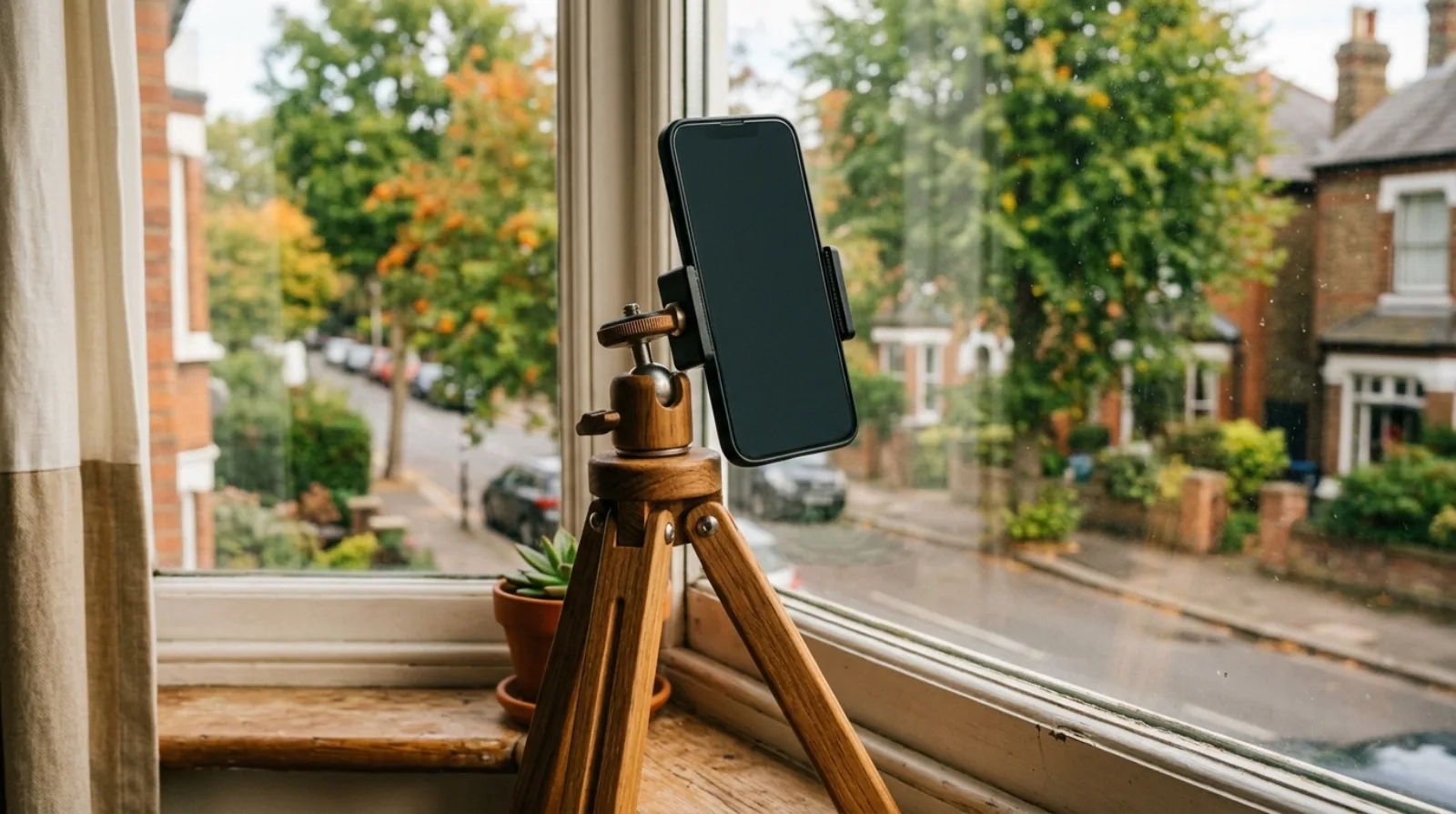
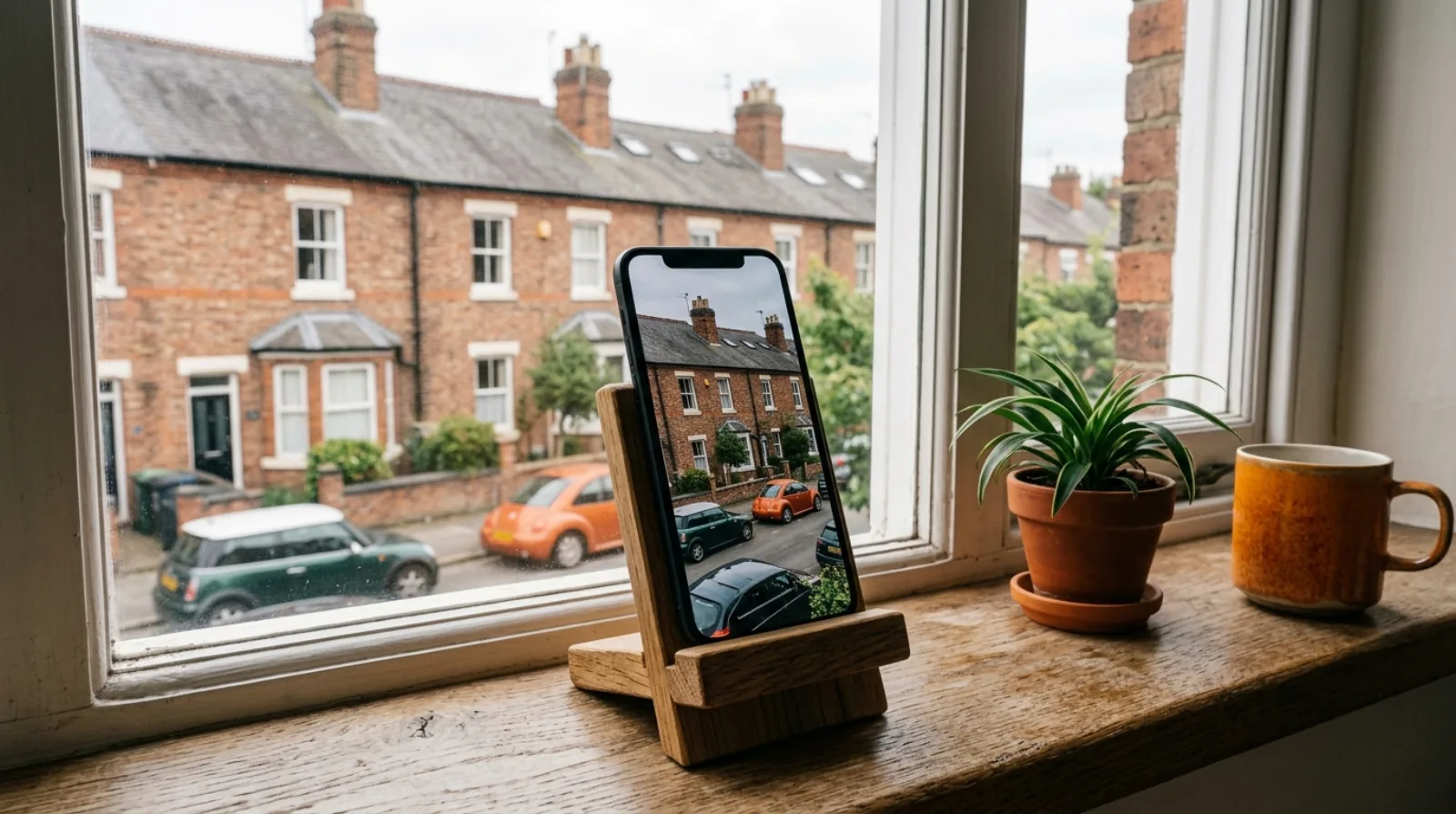
Your areas, on your phone, badly.
The streets. The building types that dominate. The corner shop everyone uses. The park in autumn. The station approach at the hour when it matters. The view from the block everyone asks about.
A slightly imperfect photo of a recognisable local street outperforms a flawless image of nowhere, because residents recognise their own area instantly and that recognition does the persuading. This is the visual version of the presence test in how to write a neighbourhood page: could this have come from anywhere? If yes, it proves nothing.
The agent with no listings
New agents assume the photo problem is unsolvable until they have transactions. It is the opposite: area photography is more useful than listing photography anyway.
Listing photos show property that will sell and become irrelevant, and they mostly demonstrate that a photographer was hired. Area photos support the claim that actually matters, which is that you know this place, and they keep working for years.
An afternoon walking your farm area with a phone produces more usable imagery than most established agents have, and it costs nothing. That suits the priorities described in what works in year one.
Rules about listing photos
Two things worth being careful about.
Listing photography is usually owned by the photographer or the listing brokerage, and board rules restrict reuse. Using images from listings you did not represent is both a rights problem and a representation problem, because it implies work you did not do.
Use your own listings with permission, keep them dated honestly if the market has moved, and photograph the neighbourhood for everything else.
Your own photo
One real photograph of you, taken by a person.
Visitors are confirming that a specific human exists and is who the page says. A competent phone portrait in good light achieves that; professional is better; nothing at all is the failure. Update it when it stops resembling you, because a visitor meeting you later and finding a noticeably different person has learned something you did not intend.
Avoid generated portraits entirely here. The whole point of the image is proof of a person.
The technical thing worth more than all of it
Compress everything.
Unoptimised hero images are the most common reason agent websites are slow, and the deciding visit happens on a phone on cellular data. Google states in its page experience documentation that its core ranking systems look to reward good page experience and that Core Web Vitals feed those systems, so weight costs visibility as well as patience.
Practically: export at around 1600 pixels wide for a full-width image, smaller for inline use, and save in a modern format such as WebP. A photo straight from a modern phone camera typically carries several times the data any website needs, and the difference is invisible to the eye and obvious in load time.
How many images you actually need
Fewer than the template asks for. Each should be doing a job.
One of you. Several of each area you claim. Images that support specific pages, such as the building type a page discusses. That is usually the entire requirement.
Galleries filled for their own sake add weight, slow the page, and prove nothing. If you cannot say what a photo demonstrates, it is decoration, and decoration on a slow page is expensive twice over.
A practical afternoon of shooting
If this sounds vague, here is the version that produces usable material in one session.
Pick the area you most want to be known for. Walk it with your phone around mid-morning or late afternoon, when the light is soft and shadows are not harsh. Shoot horizontally rather than vertically, because website images are wide and cropping a vertical photo loses most of it.
Take the establishing shots first: the main street, the residential street that typifies the area, the approach to transit. Then the building types that dominate, photographed from across the road so the whole facade fits. Then the details that come up in conversation: the park entrance, the parking situation, the corner everyone mentions.
Avoid people's faces and identifiable house numbers where you can, since photographing private homes for marketing purposes is worth being considerate about. Streetscapes and general views avoid the issue entirely.
Take considerably more than you need. Half will be unusable and you will not know which half until you look at them properly on a larger screen.
One session of an hour or two typically yields enough for a neighbourhood page, a homepage image, and several supporting pages, which is more photography than most agent sites contain.
The takeaway
Stop using stock, because it contradicts the only claim your site is making. Photograph the places you actually work, on your phone, and accept slight imperfection as the price of proof. Use one real photo of yourself, use listing images only where you have the rights and the involvement, and compress everything before it ships. An agent with no listings and an afternoon of area photography has a more convincing website than one paying for polished images of houses in another country. And reshoot the area photography every couple of years. Neighbourhoods change, and images showing a streetscape that no longer exists quietly undermine the currency of everything around them. The reshoot is another afternoon, it produces better photographs than the first attempt because you now know what you use, and it keeps the strongest claim on your site, that you are genuinely present here, demonstrably true.
One last thing worth checking before you ship anything: look at how each image appears on a phone rather than on your laptop. Wide photographs get cropped aggressively on narrow screens, and a streetscape that reads beautifully at desktop width can become an unidentifiable section of pavement on the device where most people will actually see it. Shooting with a little extra room around the subject solves it, and reviewing on a phone before publishing catches the ones that do not survive the crop. None of this requires a camera, a photographer, or a budget. It requires walking around the place you already claim to know, which is the one advantage over a stock library that you will always have and no competitor can buy. The agents whose sites feel local are almost never the ones who spent the most on imagery; they are the ones who took their own photographs of somewhere real.