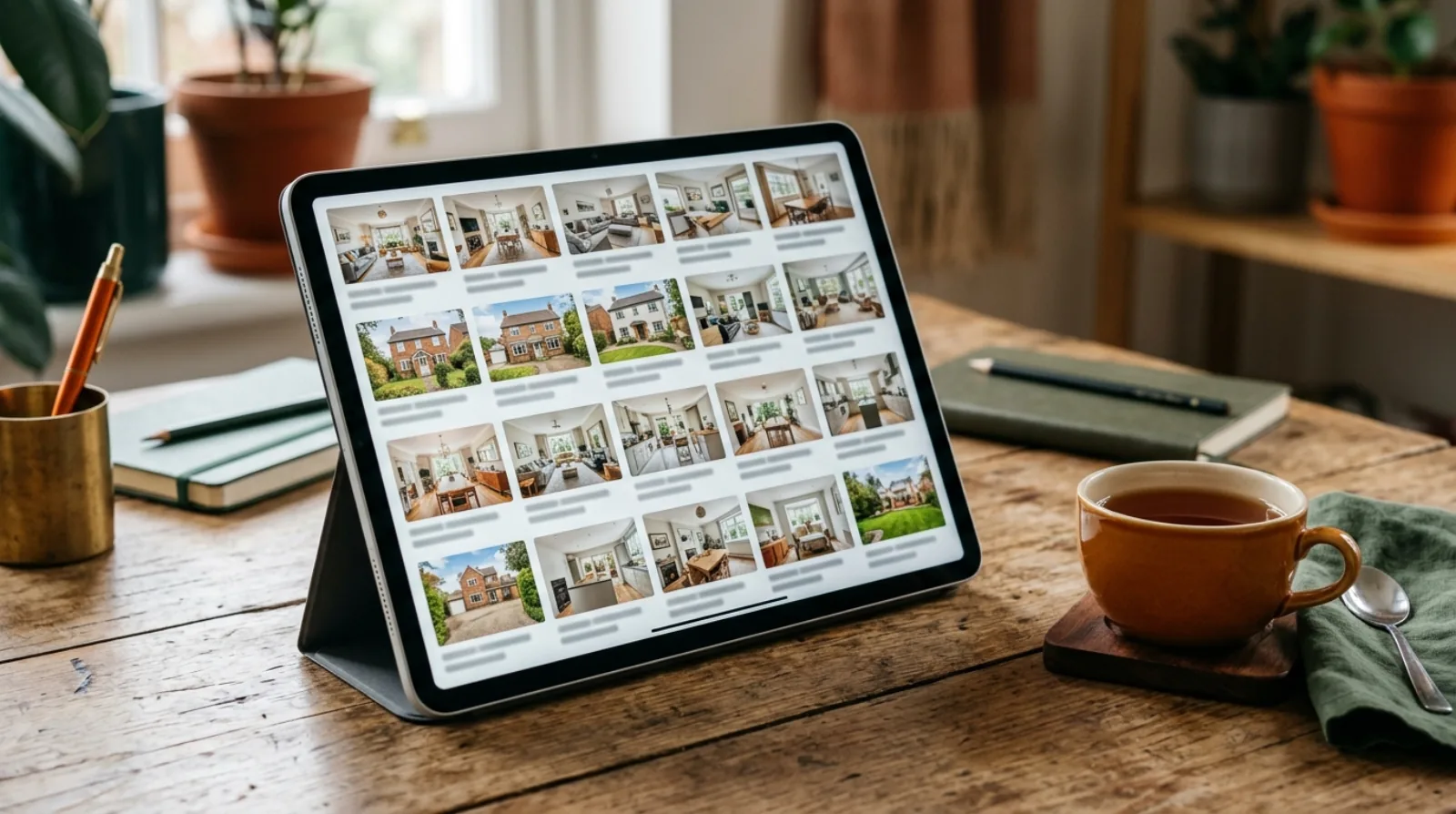
Agents keep describing the same situation. A year of YouTube videos, views climbing, subscribers past a few thousand, and not one client traced back to the channel. The channel is working. Nothing is picking up what it delivers.
The two channels do different jobs
YouTube finds people. Its search and recommendation systems put your video in front of somebody who was not looking for a real estate agent. They were curious about a neighbourhood, or they were watching something else and your video appeared next. That kind of reach is hard to buy and impossible to create on your own website.
Your website converts people. Almost nobody lands on it by accident. They arrive because they searched a specific question, or because someone gave them your name and they are checking you out. They are further along in their decision than any YouTube viewer.
Running only YouTube means a lot of attention and no place for it to go. Running only a website means a good destination that few people find. The channels are worth more together than the sum of the two.
Who owns the audience
This is the difference agents discover late.
Your YouTube subscriber count is a number you can see and cannot use. There is no export. You cannot email those people. If your reach drops next quarter, the subscribers stay subscribed and stop seeing you, and there is no support line that fixes it. The relationship is between YouTube and the viewer, with you in the middle.
Your website works the other way. The email address someone types into your form is yours. The phone call comes to your phone. If Google sends less traffic next quarter, the list you already built still opens your emails.
That does not make YouTube a bad investment. It makes YouTube a rented channel, which changes how you use it. You use rented channels to find people, and you move those people onto something you own. In practice that means every video points to a specific page, and that page offers a reason to give you an email address. This is the same logic as the tradeoff in our post on social media versus your website.
YouTube search and Google search want different things
Somebody typing into YouTube has already decided to watch something. They want to see a street, hear a tone of voice, get a feel for a building. Text will not satisfy them.
Somebody typing the same words into Google usually wants an answer they can read in seconds. If the result is a ten-minute video, many of them go back and pick a page instead.
This explains a pattern that confuses agents. A neighbourhood tour does well on YouTube and never appears on Google for the same phrase. Nothing is broken. The two searches want different formats.
The practical response is to serve both. Put the video on YouTube for the people who want to watch. Write the page on your own site for the people who want to read. Embed the video in that page so the readers who do want to watch can, without leaving. Our post on neighbourhood pages covers how to build the written half.
The transcript is the part almost everyone skips
A search engine cannot watch your video. Neither can an AI assistant. Everything you said out loud in five minutes is invisible to them unless it exists as text on the page.
That is a real loss, because what you said is usually the most specific local content you produce all month. You named streets, quoted prices, explained why one block is quieter than the next. None of it is searchable while it lives only in an audio track.
Publishing the transcript underneath the embedded video fixes it. Do not paste the raw output. Cut the filler, break it into short sections with headings, and correct the place names the automatic transcription got wrong. What you end up with is 600 to 1,000 words of local detail that can be indexed and quoted.
Google's video guidance asks for much the same thing: keep the video on a page with descriptive text around it, and make sure the content can be crawled, per Google Search Central. For AI assistants the requirement is similar. Google states plainly that no special file or markup is needed for its AI features and that content should be kept in text form, in its AI features documentation.
The realistic time cost
Agents underestimate this, so it is worth being blunt about the parts.
A single decent neighbourhood video involves planning what you will say, getting to the location, filming enough footage to cut from, editing, writing a title and description, making a thumbnail, uploading, and then cleaning up the transcript for your own site. Even with a fast workflow and no perfectionism, this is a half day of work per video for most people doing it themselves.
Publishing once a month for a year is twelve half-days. That is a real commitment against listing appointments and client work. Paying an editor removes some of it and adds a cost, and the filming and the knowing what to say stay with you.
The honest comparison is against what else that time could do. Twelve half-days spent writing local pages on your own site produces more searchable material. Twelve half-days spent calling past clients produces more referrals in the short term. YouTube wins when you can sustain it long enough for the library to compound, because old videos keep being found. It loses badly when abandoned at month four, since a channel with six videos and no updates persuades nobody.
When an agent should skip YouTube entirely
Three situations where the answer is no, at least for now.
Your website does not work yet. Sending new attention to a site that does not answer questions or give people a way to reach you wastes the attention and the filming time both. Fix the destination first. Our post on traffic without calls covers how to tell whether that is your situation.
Your market is small. YouTube rewards reach, and in a town with a few hundred transactions a year most of your reach is people who will never buy there. Your Google Business Profile, your local pages, and the people who already know you will return more per hour.
You cannot commit for a year. A channel needs a library before it produces much, because most of the value comes from old videos continuing to be found. Four videos and a gap is worse than no channel, because it signals something abandoned.
Making the two work together
The workflow that produces the most from one filming session looks like this.
Pick a topic that is a real local question, because a general one competes with every agent in the country. "What the strata fees cover in the towers on this street" beats "five tips for buyers", because the specific version has almost no competition. Our post on what is worth filming covers choosing topics in depth.
Film it, publish on YouTube, and write a description that says what the video covers and links to the matching page on your site.
Build that page on your site with the video embedded at the top and the cleaned-up transcript below it, organised with headings so somebody can skim.
Put one clear next step on the page. Something specific beats "contact me": offering to pull the documents for a particular building, or to send the last six months of sales on that street.
Then link the page from your other related pages, so a visitor who arrived somewhere else can find it.
That sequence turns one afternoon of filming into a video that can be recommended to strangers and a page that can be found and quoted. NAR's 2025 Profile of Home Buyers and Sellers reports 88 percent of buyers bought through an agent, so the question was never whether they hire someone. It is whose name they have when they decide.
Measuring it honestly
Watch time and subscribers tell you whether the videos are good. They do not tell you whether the channel earns anything.
The numbers that matter are further down. How many people clicked through from a video to your site. How many of those gave you an email address or called. How many conversations began with someone saying they had watched something.
Ask that last question out loud at every first meeting and write down the answer. Referral and video attribution both get lost in analytics, because the person who watched three videos in March searched your name in July and arrived as a direct visit. Only the conversation captures it.
If after a year nobody mentions the videos and the clicks do not turn into contacts, the channel is costing you half a day a month for reach that is not converting. That is a fair reason to stop, and it is a decision you can only make with the numbers written down.
The takeaway
Use YouTube to be found by people who were not looking for you, and your own website to be chosen by people who were. The channel builds reach on land you rent. The site builds a list and a set of pages you own. Film once, publish the video where it gets seen, and put the same video plus the written transcript on the page where it supports a decision. Skip the channel entirely if your site is not ready, your market is small, or you cannot keep it going for a year.