Agents are told to do video, so they film listing tours. The tour gets watched by the seller, the seller's family, and two competing agents. Then the conclusion is that video does not work for real estate, which is the wrong lesson from a fair experiment.
What the listing tour is actually for
It is a service to your seller, and a legitimate one. It demonstrates effort, it helps the listing look well marketed, and sellers value it.
It is not lead generation, because the audience for a specific property disappears the moment that property sells. A video with a lifespan of three weeks, aimed at people already considering one address, cannot compound into anything.
Keep making them if your sellers value them. Just stop judging your video strategy by their performance.
The four that earn their time
The neighbourhood walk. Filmed on your phone, showing what you would point out from the car. Which corner takes water in November, which block goes quiet after seven, where the visitor parking actually is, what the walk to the station is genuinely like in the rain.
This is the same asset as a good neighbourhood page, and video makes the presence undeniable in a way text cannot. Google's helpful content guidance rewards content demonstrating first-hand expertise from having actually visited a place, and it is hard to fake standing on a street.
The recurring-question answer. Whatever you explain to clients every week: what a depreciation report tells you, how a tenanted sale works here, why that building type worries you. Filmed once, in ninety seconds, without production.
These work precisely because they are unpolished. A practitioner answering a question sounds like help; the same content over-produced sounds like an advertisement, and viewers weigh the two completely differently.
The honest market note. Not a recitation of board statistics, which everyone has. What you are actually seeing at showings and in offers, stated as your observation, with a visible date. The numbers are the commodity; your read is the content.
The introduction on your own site. The one that should look competent, because it is doing verification work for people who already heard your name and are checking whether you seem like someone to call.
The technical step that matters more than the camera
Publish a transcript.
Search engines and AI assistants read text far more reliably than they interpret video. An untranscribed video is close to invisible to both, no matter how good it is. Putting the transcript on the same page converts a video into readable, quotable content, and it costs almost nothing now that transcription is routine.
This single step does more for discoverability than any amount of editing, and almost nobody in real estate does it.
Where each one belongs
Different destinations do different jobs, and publishing only to one wastes the work.
Social gets reach and expires within days, which suits market notes and short observations. A video library on a platform like YouTube stays searchable and suits the neighbourhood and recurring-question types. Your own site is where a video should sit beside the page it supports, with its transcript contributing to that page.
The common mistake is filming for social only, which means every video you made last year is now unreachable, exactly the problem described in social media versus your website.
Who you should actually be filming for
Worth reconsidering the audience. NAR's 2025 takeaways report that sellers now own their homes for a median of 11 years before selling, an all-time high, and that first-time buyers fell to 21% of the market.
That describes an audience mostly not in the market today. Transaction videos aimed at active buyers reach a shrinking pool. Content demonstrating long-term knowledge of a neighbourhood reaches the homeowner who will list in three years and is quietly forming an opinion about who knows the area, which is a much better fit for how video actually gets discovered over time.
The cadence that survives
One useful video a month, sustained, beats eight in January and nothing after. The neighbourhood and recurring-question types also age well, so the library keeps working rather than needing replacement, and a year of that pace produces a genuinely useful body of material.
Market notes are the exception. Date them visibly and let them expire gracefully, for the same reason we date market sections on written pages.
Getting over the part that stops most agents
The obstacle is almost never equipment. It is the discomfort of watching yourself, and the resulting instinct to keep re-recording until it is perfect, which is how a video habit dies in week two.
Three things make it survivable.
Film in one take and accept it. The small stumbles you notice are invisible to viewers and frequently make the video more credible, because they signal a person rather than a production. Re-recording six times produces something worse and guarantees you will not do it again next week.
Start with the question you have answered most often. You already know this material cold, which removes the script problem entirely. If you can explain it to a client in the car, you can explain it to a camera.
Film several at once. The setup is most of the effort, so a single session producing four videos costs barely more than one and gives you a month of material. This is also how the habit survives a bad week.
The bar is lower than agents assume. Nobody is comparing your neighbourhood walk with television. They are comparing it with the other agents in your area, most of whom have published nothing at all.
The takeaway
Stop measuring your video strategy by listing tours, which serve your seller rather than your pipeline. Film the neighbourhood walk, the question you answer every week, the honest market observation, and one decent introduction for your own site. Keep the production low except for the introduction, publish transcripts every time, and put each video where its lifespan matches its purpose. The audience worth reaching is mostly not moving this year, which is exactly why the durable formats are the ones that pay. And keep the first one. Whatever you film first will be worse than what you film in six months, and it will also be the thing that gets you comfortable enough to make the sixth. Agents who wait until they are good at video never start, while agents who publish something adequate in February have a small library by August and are noticeably better at it by then. The library is what compounds, and it only exists if the first attempt survives your own judgment of it.
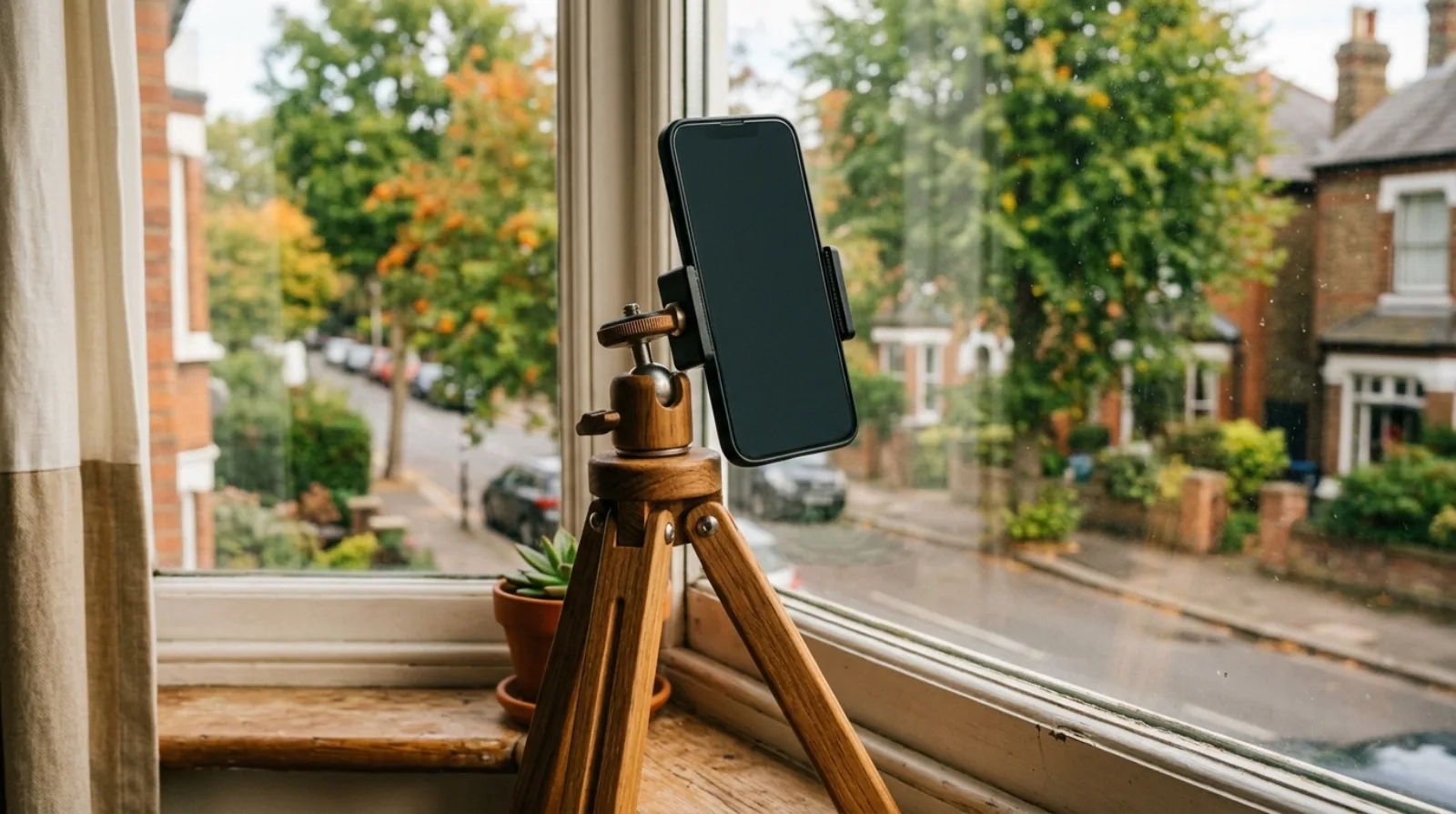
One more practical note. Film in a quiet place and use whatever microphone you have rather than the one built into the camera, because viewers forgive poor picture and abandon poor sound almost immediately. A pair of wired earphones with a microphone costs nothing and solves most of it. Beyond that, natural light from a window in front of you handles the rest, and no further equipment is worth buying until you have published a dozen videos and know what actually limits you. Publish the transcript with every one of them, and the small library you build this year keeps being findable long after the videos themselves have stopped appearing in anyone's feed.